DeepField

Best Light Pollution and Narrowband Filters

Light pollution and narrowband filters block the broad-spectrum glow from sodium and LED streetlights while passing the narrow emission lines that nebulae radiate. The right filter depends on your sky darkness, your camera type (one-shot color versus dedicated mono), and your target. We cover broadband LP reducers for mild skies through ultra-narrowband dual-band filters for city-center imaging, rated on transmission bandwidth, price, and how they perform with color OSC cameras.

Quick answer

The Optolong L-eXtreme is the best narrowband filter for most one-shot-color astrophotographers imaging emission nebulae under moderate to severe light pollution. Its 7 nm H-alpha and OIII dual passband delivers high-contrast nebula data with a color OSC camera. Under darker skies or for broadband targets, the Optolong L-Pro broadband filter preserves star color and works on galaxies and clusters.

DeepField may earn a commission from links below, at no cost to you. Last updated June 2026.

Top Pick Optolong L-eXtreme Dual-Band Filter (7 nm)
4.6 Amazon

Optolong L-eXtreme Dual-Band Filter (7 nm)

A 7 nm dual-band narrowband filter passing H-alpha and OIII designed specifically for one-shot-color cameras under heavy light pollution. One of the most popular emission-nebula filters for OSC imagers.

Best for City and suburban astrophotographers who want to capture emission nebulae with a one-shot-color camera.

Aggressive dual-band narrowband passband cuts virtually all LED and sodium light pollutionWorks with DSLR, mirrorless, and dedicated OSC astro camerasProduces strong H-alpha and OIII contrast on emission nebulae even from suburban skies Too narrow for broadband targets like galaxies, star clusters, or reflection nebulae
No. 2 IDAS NBZ Duo-Band Nebula Booster Filter
4.6 Amazon

IDAS NBZ Duo-Band Nebula Booster Filter

A dual-band H-alpha and OIII filter from IDAS that uses multi-notch coating technology for smooth passband transitions and is highly regarded among OSC imagers in Japan and Europe.

Best for Experienced imagers on fast refractors or astrographs who have found the L-eXtreme produces halos at their focal ratio and want a premium alternative.

Multi-notch coating delivers clean passband edges and minimal star halosExcellent performance on fast focal ratios down to approximately f/3.5Recognized for delivering natural-looking nebula colors from OSC data More expensive than the Optolong L-eXtreme for equivalent narrowband performance
No. 3 Optolong L-eNhance Dual-Band Filter (25 nm)
4.5 Amazon

Optolong L-eNhance Dual-Band Filter (25 nm)

A wider 25 nm dual-band filter passing H-alpha and OIII plus H-beta, gentler than the L-eXtreme and better suited to moderately dark skies where a full narrowband cut is too aggressive.

Best for Imagers under moderately dark rural or suburban skies who want strong nebula performance without the processing complexity of the 7 nm filter.

Wider 25 nm passband preserves more natural star colors than the 7 nm L-eXtremeWorks in darker Bortle 4 to 6 skies where the L-eXtreme may over-suppressMore accessible processing workflow than the ultra-narrowband filters Less aggressive light pollution suppression than the L-eXtreme under Bortle 7-plus skies
No. 4 Antlia AHa 5nm Dual-Band Filter
4.5 Amazon

Antlia AHa 5nm Dual-Band Filter

A tight 5 nm H-alpha and OIII dual-band filter from Antlia that competes directly with the Optolong L-eXtreme at a similar price, with a reputation for minimal star halos on fast scopes.

Best for Imagers who have researched the L-eXtreme and want to compare a strong alternative with slightly tighter bandwidth and similar pricing.

5 nm passband is slightly tighter than the L-eXtreme 7 nm for higher contrastWell-regarded for low halo performance on fast focal ratiosAvailable in 1.25 inch, 2 inch, and several clip-in formats Same broadband-target limitation as any narrowband filter
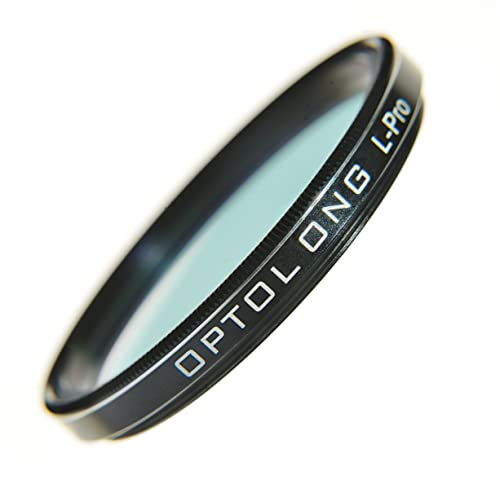
No. 5 Optolong L-Pro Broadband Light Pollution Filter
4.4 Amazon

Optolong L-Pro Broadband Light Pollution Filter

A broadband multi-bandpass filter that blocks artificial light pollution while passing a wide slice of the visible spectrum, suitable for galaxies, star clusters, and reflection nebulae from bright skies.

Best for Photographers in Bortle 5 to 7 suburbs who image a mix of galaxies, clusters, and nebulae and need one filter for all targets.

Works on broadband targets like galaxies where narrowband filters are uselessPreserves natural star and galaxy colors better than narrowband filtersAvailable in 1.25 inch, 2 inch, and clip-in formats for many camera types Less effective at nebula suppression than dual-band narrowband filters

The method

How we chose

We evaluated each option on fit, build quality, daily usability, and value. Our top pick, Optolong L-eXtreme Dual-Band Filter (7 nm), earned the spot because the most popular narrowband filter for osc imagers under light pollution. if you want nebulae from the suburbs, this is the filter. The comparison above highlights exactly who each pick is best for.

FAQ

Best Light Pollution and Narrowband Filters: FAQ

What is the difference between a broadband and narrowband filter?+

A broadband light pollution filter passes a wide slice of the visible spectrum while blocking the specific wavelengths emitted by sodium and LED lights. It reduces sky glow on galaxies, star clusters, and reflection nebulae. A narrowband filter passes only very narrow windows around emission lines like H-alpha and OIII. Narrowband filters are much more aggressive, making them powerful for emission nebulae under bad light pollution but useless for broadband targets like galaxies.

Can I use a narrowband filter with a color DSLR or mirrorless camera?+

Yes, dual-band filters like the Optolong L-eXtreme and L-eNhance are designed specifically for one-shot-color OSC cameras including DSLRs and mirrorless bodies. They pass two wavelengths that map to the red and teal channels of a Bayer sensor. The resulting images require different processing than broadband frames, with a modified stretching workflow to separate the H-alpha and OIII channels, but excellent nebula results are achievable.

Will a filter work on a fast focal ratio telescope?+

Most filters work to about f/4 without significant problems. Very fast systems at f/2 or f/2.8, like the Celestron RASA or Samyang 135 mm f/2, can cause filter halos around bright stars because light hits the filter coating at steep angles outside its design spec. Check the filter manufacturer's stated minimum f-ratio before buying for a fast system.

What filter size do I need for my camera?+

For cameras with 2-inch filter threads, a 2-inch filter is the standard. For larger sensors like full-frame mirrorless cameras or large dedicated astro cameras, a 2-inch clip-in filter or 48 mm threaded filter may not cover the full sensor without vignetting. In those cases you need a 3-inch or larger filter, or a dedicated clip-in filter designed for your camera body. Check the image circle the filter manufacturer lists.

Do light pollution filters work for Milky Way photography?+

Broadband LP filters help slightly with Milky Way shots from bright suburbs, but narrowband filters suppress so much of the visible spectrum that Milky Way images look monochrome and unnatural. For wide-field Milky Way photography, a dark sky location delivers far more improvement than any filter. Filters are most valuable for long-exposure deep-sky targets, not wide-field nightscape shots.